MailChimp

Cosmic Energy

Login Form

Ads Remote
Who's On Line
We have 98 guests and no members online
Essential Oils


The Fourth way - Wrong Functions - 2 - PD Ouspensky

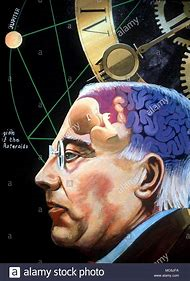
The Fourth way - Wrong Functions - 2 - PD Ouspensky
Q: By movements, do you mean physical movements?
A. Yes, ordinary things, like driving a car or writing; you cannot observe anything of that kind. You van remember, and later it creates the illusion of observing In reality you cannot observe quick movements. So you see, as we are now, real struggle with negative emotions is a question of the future, but there are many things we need to know first and methods which we must study.
There is no direct way; we must learn roundabout methods of how to attack them. First of all, we have to change many of our mental attitudes, or points of view.We have too mant wrong points of view about negative emotions; we find them necessary, or beautiful, or noble, we glorify them, and so on.We must get rid of all that.
So we have to clean our mind in relation to negative emotions. When our mind is right concerning negative emotions, when we have ceased to glorify them, then little by little we shall find a way to strugglt with them, each separately. One person finds it easier to struggle, with one particular negative condition, another finds it easier with another. So you must begin with the easiest, and what is easiest for me may be the most difficult for you; so you must find the easiest for yourself, and later come to the more difficult.
Q: Does that explain why I associate certain of my own negative emotions with people I remember back in my childhood?
A. Quite probably, because many negative emotions are learned bu imitation. But some may be essentially in our nature, because our nature also had different inclinations one way or another way. Emotion divided into groups, and one person may be more inclined to one group and another to another group. For instance, some people have an inclination to different forms of fear, others to different forms of anger. But they are different and do not come from imitation.
Q: Are they the harder to struggle with?
A: Yes, but they are generally based on some kind of weakness, because at the basis of negative emotions there are generally lies a kind of self-indulgence-one allows oneself. And if one does not allow oneself fears, one allows anger, and if one does not allow anger, one allows self-pity. Negative emotions are always based on some kind of permission.
But before we come to such complicated questions as struggle with negative emotions, it is very important to observe ourselves in small everyday manifestations of the moving function and also those which we can observe of the instinctive function, that is, our sensation of pleasant and unpleasant, warm and cold-sensations like that which are always passing through us.
Q. You have not mentioned identification, but can I ask you a question about it?
A: Please, but not everybody here has heard about it, so I will just explain a little. You see, when we begin to observe emotions particularly, but really all other functions as well, we find that all our functions are accompanied by a certain attitude;
we become too absorb in things, too lost in things, particularly when the silghtest emotional element appears. This is called identification. We identify with things. It is not a very good word, bu in English there is none better.
The idea of identification exists in Indian writings and the Buddhists speak of attachment and non-attachment. These words seem to me even less satisfactory because, before meeting this system, I read the words and did not understand-or rather I understood but took the idea intellectually.
I understood fully only when I found the same idea expressed in Russian and in Greek by early Christian writers. They have four words for four degrees of identification, but this is not necessary for us yet. We try to understand the idea but not the definition but by observation. It is a certain quality of attachment-being lost in things.
Q: You lose your sense of observation?
A: When you become identified you cannot observe.
Q: It usually starts with emotion? Does possessiveness come into it too?
A: Yes. Many things. It begins first with interest. We are interested in something, and the next moment you are in it, and do not exist anymore.
Q: But if you are thinking and conscious of the effort of thinking, does that save you from identification? You cannot fo both at once, can you?
A: Yes, it saves you for a moment, but the next moment aother thought comes and takes you away. So there is no guarantee. You must be on the watch all the time against it.
Q: What negative emotions are you likely to glorify?
A: Some people are very proud of their irritability or irritation. or something like that. They like to be thought very hard. There is practi8cally no negative emotion which you cannot enjoy, and that is the most difficult thing to realize. Really some people get all their pleasures from negative emotions.Identification in relation to people takes a special form which is called, in this system, considering.
But considering can be of two kinds-when we consider other people's feelings, and when we consider our own. Chiefly we consider our own feelings. We consider mostly in the sense that people somehow do not value us enough or do not think about us enough,or are not careful enough about us. We find many words for that. This is a very important facet of identification and it is very difficult to be free from it; some people are fully in its power. In any case, it is important to observe considering.
Reference: The Fourth Way: P.D.Ouspensky
Articles-Popular
- Main
- Contact Us
- Planetary Existences-2
- Planetary Existences
- TWO REVELATIONS-2
- Jeffery Epstein - The Saga - 9
- Jeffery Epstein - The Saga - 8
- Jeffery Epstein - The Saga - 10
- The Two Revelations
- The Fourth Way - Study of Oneself - P.D.Ouspensky
- Impeachment Investigators Subpoena White House - Ukraine
- Universality of Initiation
- The Path Of Initiation
- Initiation and the Devas
- The Participants In The Mysteries-2
- The Fourth Way - Wrong Functions - P.D Ouspensky
- The Final Initiation
- Statues are a mark of honour. Like Edward Colston, Cecil Rhodes and Oliver Cromwell have to go
- Discipleship - Group Relations - 2
- The Probationary Path - 2
- The Participants In The Mysteries
- Discipleship - Group Relationships
- Discipleship
- The Succeeding Two Initiations
- Jeffery Epstein - The Saga - 7
- Jeffery Epstein - The Saga - 6
Articles - Latest
- They Lied to Us! The Truth They Hid About Hitler’s Death — Gerard Williams
- Ramaposa Dragged Out of Parliament
- Madagascar Goverment Collapse
- The Reality of Digital Id
- Welcome To The End Of Western Dominance
- Why is the Sahel turning its back on France?
- Sarkozy gets 5 years in prison in Gadhafi case
- The EU in 2025: A union at the crossroads of chaos
- Deep distrust of EU leaves Italy's Meloni in a corner over bailout fund
- Regime crisis in France: Bayrou falls, now Macron must go!
- Idi Amin president of Uganda
- Anger at Starmer's 'surrender deal' that hands Spain control over Gibraltar border
- Iran doubles down as US signals Israel could strike during nuclear talks
- What could have caused Air India plane to crash in 30 seconds?
- WW3 fears explode as Britain now Russia's 'enemy number 1' - even ahead of Ukraine