MailChimp
Subscribe to Newsletter

Cosmic Energy

Login Form

Ads Remote
Who's On Line
We have 60 guests and no members online
Essential Oils


The Strait of Hormuz
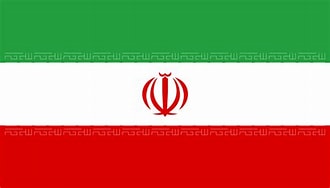
The Strait of Hormuz
The Strait of Hormuz is a critical maritime chokepoint connecting the Persian Gulf to the Gulf of Oman, through which
roughly 20% of the world’s oil and liquefied natural gas passes.
Geographic Overview
The Strait of Hormuz lies between Iran to the northand the Musandam Peninsula of Oman to the south, with
the United Arab Emirates nearby. It is approximately 104 miles (167 km) long, with a width ranging from 24 miles
(39 km) at its narrowest point to 60 miles (97 km). Shipping lanes are two miles wide in each direction,
separated by a two-mile buffer, mostly within Omani territorial waters, while Iran controls the northern side.
The strait is deep enough (200–330 feet) to accommodate the largest crude oil tankers.
...........
Strategic Importance
The strait is the only sea passage from the Persian Gulf to the open ocean, making it vital for global energy
security. About 20% of global oil and liquefied natural gas exportstransit the strait, with major destinations
in Asia, including China, India, Japan, and South Korea. Disruptions can significantly affect global oil prices
and supply chains, as seen during the 2026 Iran conflict when traffic dropped by over 90%, causing spikes in oil,
gas, and commodity prices.
Historical Context
The strait has been a strategic maritime route for centuries, with foreign powers like Portugal and Britain
controlling it at various times. In modern history, it has been central to conflicts such as the Tanker War during
the Iran-iraq War, U.S. military operations like Operation Praying Mantis, and repeated threats by Iran to close
the strait in response to sanctions or military actions. Despite these tensions, the strait has never been fully
closed for extended periods, though temporary disruptions have occurred.
.........
Recent Developments (2026)
During the 2026 Iran war, Iran effectively closed the strait to most international shipping, targeting vessels with
drones, missiles, and naval mines, which caused a global energy supply shock. In response, the U.S. and
other nations sought to reopen the strait, leading to a two-week ceasefire agreementallowing limited
passage. Iran has also negotiated selective transit deals with countries like China, India, and Malaysia,
creating a two-corridor system: an IRGC-controlled northern corridor and a southern corridor along Oman.
These moves demonstrate Iran’s ability to exert asymmetric leverageover global shipping while generating
potential revenue through tolls.
....................
Economic and Global Impact
Closure or disruption of the strait has immediate effects on oil and gas prices, as well as fertilizer and
commodity markets, since the Persian Gulf region is a major exporter of petroleum and nitrogen fertilizers.
Even partial closures can force countries to rely on limited pipeline alternatives, which cannot fully
replace the strait’s capacity, highlighting its irreplaceable role in global energy logistics.
Conclusion
The Strait of Hormuz remains one of the world’s most strategically significant maritime chokepoints,
central to global energy security and international trade. Its control has been a focal point of geopolitical
tension for decades, and recent events in 2026 underscore its continued importance in shaping global
economic and political dynamics.
Reference: Copilot
Articles-Popular
- Main
- Contact Us
- Planetary Existences-2
- Planetary Existences
- Jeffery Epstein - The Saga - 9
- TWO REVELATIONS-2
- Jeffery Epstein - The Saga - 8
- Jeffery Epstein - The Saga - 10
- The Two Revelations
- The Fourth Way - Study of Oneself - P.D.Ouspensky
- Impeachment Investigators Subpoena White House - Ukraine
- Universality of Initiation
- The Fourth Way - Wrong Functions - P.D Ouspensky
- Initiation and the Devas
- The Path Of Initiation
- Statues are a mark of honour. Like Edward Colston, Cecil Rhodes and Oliver Cromwell have to go
- The Participants In The Mysteries-2
- The Final Initiation
- Discipleship - Group Relations - 2
- The Probationary Path - 2
- The Participants In The Mysteries
- Discipleship - Group Relationships
- Discipleship
- Jeffery Epstein - The Saga - 7
- The Succeeding Two Initiations
- Jeffery Epstein - The Saga - 6
Articles - Latest
- Iran’s underground military network has helped sustain its capacity under attack
- Why are Ships Painted Red Below the Waterline
- Dubai is Collapsing
- Divergent Technologies, Mach Industries unveil Venom autonomous
- The Strait of Hormuz
- Uranium-mThe most powerful element in the World
- China's New Generation transport
- Iran V Israel
- US War On Iran
- They Lied to Us! The Truth They Hid About Hitler’s Death — Gerard Williams
- Ramaposa Dragged Out of Parliament
- Madagascar Goverment Collapse
- The Reality of Digital Id
- Welcome To The End Of Western Dominance
- Why is the Sahel turning its back on France?
- Sarkozy gets 5 years in prison in Gadhafi case
- The EU in 2025: A union at the crossroads of chaos
- Deep distrust of EU leaves Italy's Meloni in a corner over bailout fund
- Regime crisis in France: Bayrou falls, now Macron must go!
- Idi Amin president of Uganda
- Anger at Starmer's 'surrender deal' that hands Spain control over Gibraltar border
- Iran doubles down as US signals Israel could strike during nuclear talks